

CBP Ends ISPM 15 Hyphen Suspension What Importers Must Do Now

A single missing hyphen on a wood packaging mark can now put an entire shipment at risk.
U.S. Customs and Border Protection has reminded the trade community through TIN #67042554, issued by the Agriculture and Prepared Products Center of Excellence and Expertise, that the suspension of the ISPM 15 hyphen requirement ends on December 31, 2025. CBP has already begun paying close attention to wood packaging material compliance, and importers are seeing the real consequence of noncompliance: exams, holds, and in some cases, orders to re-export.
For importers, customs brokers, freight forwarders, overseas suppliers, and logistics teams, this is not a small formatting issue. It is a cargo release issue. If pallets, crates, skids, dunnage, or other regulated wood packaging arrive with improper ISPM 15 markings, CBP and agriculture specialists can act quickly.
The good news is that most problems can be prevented before freight leaves the origin country. The risk drops sharply when suppliers know the marking rules, importers request proof before sailing, and brokers review documents early.
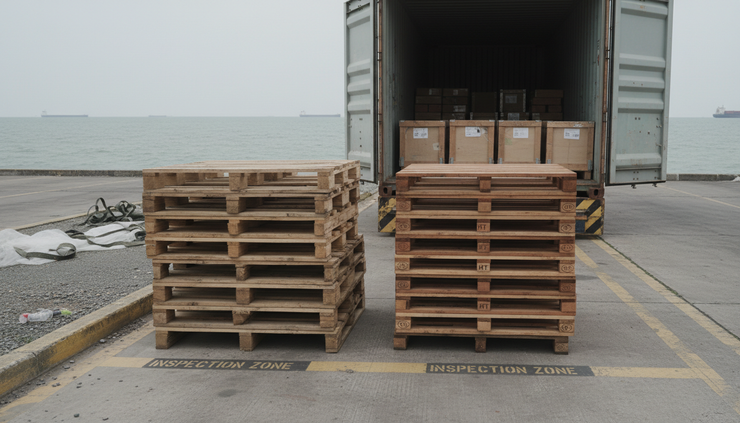
What CBP’s ISPM 15 hyphen reminder means
ISPM 15 is the international standard that governs the treatment and marking of certain wood packaging material used in global trade. The goal is to reduce the movement of pests through solid wood packaging.
The rule applies to common packing and support materials such as:
Pallets
Crates
Boxes made with regulated wood
Skids
Dunnage
Bracing
Blocking
Cable drums and reels, when made with regulated wood
Under ISPM 15, regulated wood packaging material must be properly treated and marked. The mark usually includes the IPPC symbol, a country code, a producer or treatment provider code, and the treatment code, such as heat treatment or methyl bromide treatment where allowed by the exporting country.
The issue in the CBP stakeholder reminder is narrow but serious: the hyphen requirement in the ISPM 15 mark. CBP had suspended enforcement of this specific marking format requirement for a period of time. That suspension ends December 31, 2025.
Once the suspension ends, wood packaging material that fails to show the mark in the required format may be treated as noncompliant, even if the wood was actually treated.
That distinction matters. A pallet can be treated and still create a compliance problem if the mark is wrong, incomplete, illegible, or formatted incorrectly.
For search and compliance purposes, this topic sits directly at the intersection of wood packaging material, WPM wood packaging material, ISPM 15 Hypen Requirement, CBP Markings, US Imports, Customs Regulations, Customs enforcement, Agriculture Programs.
Why a missing hyphen can lead to re-export
CBP and U.S. agriculture authorities take wood packaging violations seriously because the risk is physical, not just administrative. Untreated or improperly marked wood can carry insects, larvae, fungi, or other pests. Once introduced, invasive pests can damage forests, farms, infrastructure, and domestic supply chains.
When CBP finds noncompliant WPM, the shipment may face:
Intensive examination
Agriculture hold
Delayed release
Additional terminal, storage, demurrage, or detention costs
Required separation of compliant and noncompliant cargo, if allowed
Re-export of the noncompliant wood packaging
Re-export of the cargo if the packaging cannot be safely separated
Possible penalties or future targeting risk, depending on the facts
The most painful part is that the merchandise itself may be perfectly admissible. The problem may be the pallet under it.
That is why importers should not treat ISPM 15 as a supplier-side detail. It belongs in the same compliance file as classification, valuation, country of origin, partner government agency requirements, and admissibility reviews.
If the WPM mark cannot be read, verified, and matched to the required format, the shipment can become a customs problem before anyone reviews the commercial value of the goods.
What the import community should do now
The time to fix ISPM 15 marking issues is before cargo is loaded overseas. Once freight arrives at a U.S. port with noncompliant wood packaging, options become limited, expensive, and time-sensitive.
Here are the practical steps importers should take now.
Send updated instructions to every overseas supplier
Do not assume suppliers know about the end of CBP’s suspension. Many overseas vendors use packing providers, warehouses, consolidators, and freight agents. The team that builds the pallet may never see the purchase order terms unless the importer makes the requirement clear.
Send written instructions that cover:
ISPM 15 compliance
Required mark format
Legibility of the mark
Placement of marks on pallets, crates, or dunnage
Prohibition on unmarked regulated WPM
Need to use only certified treatment providers
Photo proof before cargo is delivered to the port
Use direct language. Avoid vague phrases such as “use export-ready pallets.” That may mean different things in different countries.
A stronger instruction would say:
“Any regulated wood packaging material used for shipments to the United States must be treated and marked in full compliance with ISPM 15 and current CBP marking requirements, including the required hyphen format. Do not use unmarked, illegible, damaged, reused, or partially marked wood packaging.”
Require pre-shipment photos of the actual WPM marks
A certificate alone may not protect a shipment if the physical mark on the pallet is wrong. Importers should ask for clear photos before the cargo leaves origin.
Photos should show:
The full ISPM 15 mark
The IPPC symbol
The country code
The producer or treatment provider code
The treatment code
The required hyphen format
The mark in context on the actual pallet, crate, skid, or dunnage
Ask for wide and close-up images. A close-up confirms the mark. A wider image helps prove the mark belongs to the packaging used for that shipment.

Add WPM language to purchase orders and routing guides
Supplier emails help, but compliance language should also appear in routine business documents. Add ISPM 15 terms to purchase orders, supplier manuals, vendor routing guides, and standard operating procedures.
Place the requirement where packing and shipping teams will actually see it. If the instruction sits only in a customs manual, the origin warehouse may miss it.
A good internal checklist should ask:
Will the shipment use any regulated wood packaging?
Is the WPM new, reused, repaired, or mixed?
Are all pieces marked correctly?
Are dunnage, braces, and blocks also marked when required?
Were photos received before pickup?
Did the freight forwarder confirm no unmarked wood was added during consolidation?
Dunnage is a common weak spot. A supplier may use compliant pallets, then a warehouse adds loose wood bracing inside the container. If that bracing is unmarked, the shipment can still fail.
Watch out for reused and repaired pallets
Reused pallets create extra risk because old marks can be damaged, covered, incomplete, or no longer valid after repair. A pallet that looks sturdy is not always compliant.
Repair marks also matter. If a pallet has been repaired with new wood components, the repaired pallet may need proper treatment and marking under the applicable program rules in the exporting country.
Importers should tell suppliers not to use patched, mixed, or questionable pallets for U.S.-bound freight. The cheapest pallet can become the most expensive part of the shipment if it triggers re-export.
Train receiving and logistics teams on what to flag
Import compliance should not stop at the customs department. Warehouse, transportation, sourcing, and quality teams all touch packaging decisions.
Train teams to flag:
No ISPM 15 mark
Faded or unreadable mark
Mark missing required elements
Mark with suspicious alterations
Mark covered by labels, paint, wrap, or strapping
Pallets with mixed wood components
Loose dunnage with no mark
Packaging that appears raw, bark-covered, or untreated
This does not require everyone to become an agriculture specialist. It does require a clear escalation path when something looks wrong.
How customs brokers can help prevent holds
A customs broker cannot fix a burned-in pallet mark after the vessel arrives. Still, a good broker can help reduce risk before entry and guide the importer if CBP takes action.
Customs brokerage support can help with:
Reviewing supplier instructions
Identifying shipments with WPM risk
Coordinating document review before arrival
Advising when partner government agency issues may affect release
Communicating with CBP when a hold or exam occurs
Helping the importer assess next steps after a WPM finding
Keeping the importer informed of enforcement trends and reminders
The broker’s role is especially valuable when a shipment includes agriculture-related goods, prepared products, food ingredients, consumer goods packed in crates, machinery on skids, or mixed cargo in consolidated containers.
CBP’s Agriculture and Prepared Products Center of Excellence and Expertise focuses on industries where these packaging issues can appear often. That makes early review more useful.

Build a simple ISPM 15 control plan
Importers do not need a complex program to improve WPM compliance. A simple control plan, used consistently, can prevent many problems.
Step 1. Identify shipments that use regulated wood
Start with a basic question for each vendor and lane: does the shipment use regulated wood packaging material?
Some packaging is outside the scope, such as certain processed wood products, but do not guess. If there is solid wood in the packing, raise the question early.
Build a list of vendors that regularly ship with pallets, crates, skids, or dunnage. Focus first on high-volume suppliers, new suppliers, and suppliers in lanes where cargo is often repacked or consolidated.
Step 2. Standardize supplier instructions
Create one WPM instruction sheet for U.S.-bound shipments. Keep it short enough that a packing team can use it.
The instruction should include:
A plain-language ISPM 15 requirement
A warning that noncompliant WPM may cause re-export
A photo requirement before shipment
A statement that unmarked dunnage is not allowed
A contact point for questions before cargo moves
Translate the instruction if needed. Many compliance failures come from unclear communication, not bad intent.
Step 3. Review photos before cargo leaves origin
Do not let photo review become a formality. Assign someone to check whether the mark is visible, complete, and readable.
If a supplier sends blurry photos, ask for new ones. If the mark is missing the required hyphen format, stop and correct the issue before pickup.
The goal is not to create more paperwork. The goal is to avoid discovering the problem under CBP control, where every hour can cost money.
Step 4. Keep records in the shipment file
Store photo proof, supplier confirmations, and packing declarations with the entry file or shipment record. If CBP asks questions, fast access to records can help the broker and importer respond.
Records may also help identify repeat problems. If the same supplier sends questionable pallets twice, the issue is not random. It needs corrective action.
Step 5. Review exceptions after each problem
When a WPM hold happens, document what failed.
Ask:
Did the supplier receive the instruction?
Did the packing site follow it?
Was compliant WPM replaced during consolidation?
Did someone add unmarked dunnage?
Were photos reviewed?
Did the mark fail because of the hyphen format, legibility, or another issue?
Use the answer to update the process. A single hold should make the next shipment safer.
What to do if CBP finds noncompliant WPM
If CBP orders action on noncompliant wood packaging, move quickly. Delays can increase port charges and reduce options.
The importer should contact the customs broker right away and gather:
Entry number and bill of lading
CBP notice or hold details
Photos from the exam, if available
Packing list and commercial invoice
Supplier WPM photos and declarations
Container loading details
Information on whether the cargo can be separated from the noncompliant WPM
Depending on the facts, CBP may require re-export of the noncompliant packaging or the affected cargo. In some cases, separation or other controlled action may be one of the options. Do not assume that treatment after arrival will be allowed. CBP and agriculture authorities control the decision.
The best response is organized, factual, and fast. Avoid arguing that the wood was “probably treated” if the mark does not meet the requirement. The physical mark is central to the compliance determination.
This article is informational only and does not replace legal advice or direct guidance from CBP, USDA, or qualified trade counsel.

The December 31, 2025 deadline should change behavior now
The end of CBP’s suspension is not a reason to wait until the last week of 2025. It is a reason to update the process now.
Importers should treat the remaining time as a preparation window. By the time enforcement risk increases fully, suppliers should already know the rule, brokers should know which lanes carry WPM risk, and shipment files should already include proof.
A strong WPM compliance plan comes down to a few habits:
Give suppliers clear instructions.
Use only properly treated and marked WPM.
Check the hyphen format before shipment.
Require clear photos of actual packaging.
Watch dunnage, bracing, and reused pallets.
Keep records with the shipment file.
Involve the customs broker before freight arrives.
I-Logix Customs brokerage services can help importers review WPM risk, prepare supplier instructions, monitor CBP updates, and respond quickly when a shipment is held. Contact I-Logix to discuss your import program and join our mailing list for practical customs compliance updates.
The safest shipment is the one that arrives with no packaging surprises. For ISPM 15, that means every regulated piece of wood is treated, marked, readable, and formatted correctly before it ever reaches a U.S. port.


Comments